


Earth Day is Coming!

Updated: Mar 26
Table of Contents
Mission & Purpose
What Are We Exploring?
What Are We Looking For?
Where Will the Earth Day Exhibition Be Located?
Our Goals for the 2026 Exhibition
Important Dates & Deadlines
Benefits of Participation
Earth Day Toolkit
Take Action for Earth Day with Confluence Community
Fundraising and Sponsorship Opportunities
How Will We Raise the Funds?
The Story Behind the Elements Earth Day Collection
2027 Residency Program
Community-Driven Initiative & Capacity Transparency
Organizational Structure & Transparency
Growing List of Helpful Links
Earth Day Community Partners
Frequently Asked Questions FAQS
Vision for Earth Day Program

Earth Day is coming, and this year we are bringing artists, organizations, businesses, and local initiatives together to explore how creativity and everyday actions can protect the planet.
We are living through visible environmental change, shifting climates, habitat loss, pollution, and growing pressure on natural systems. At the same time, people everywhere are restoring ecosystems, rethinking materials, and finding more responsible ways of living and creating.
The Earth Day Art Exhibition 2026 is a collaborative space where art, environmental awareness, community resources, and practical actions can show how people are protecting and caring for the environments around them.
Artists, educators, organizations, businesses, and community members are invited to share their impact and find meaningful ways to participate. We would like to present art, projects, and community efforts side by side to show how environmental care happens across sectors.
Mission & Purpose
Through exhibitions, collaborative projects, and resource sharing, the Earth Day Program transforms creativity into collective impact, where artistic expression meets tangible action for people, communities, and the planet.
Elevate Creative Voices
Provide artists, writers, and creatives with opportunities to share work that reflects their perspectives, passions, and visions for the planet.
Connect Community and Environment
Build meaningful intersections between art, local action, and global environmental awareness.
Promote Accessibility and Inclusion
Lower barriers to participation for artists and audiences, making creative expression and environmental engagement accessible to everyone.
Inspire Actionable Change
Use creativity as a catalyst for environmental education, sustainable practices, and community-driven solutions.
What Are We Exploring?
This exhibition centers work and initiatives connected to:
Environmental awareness and lived experience
Restoration, stewardship, and conservation
Sustainable materials and creative practices
Community resilience and local action
Relationships between people and nature
And of course the beauty of our planet

What Are We Looking For?
Artists & Creatives
Exhibit artwork related to the Earth
Share creative processes or sustainable studio practices
Participate in talks, workshops, or collaborative projects
Visual Art
All Mediums Welcome
Photography
Mixed media
Illustration
Digital art
Sculpture
Experimental image work
Videos
Zines, guides, or visual explainers
Writing
Essays & Articles
Creative nonfiction
Poetry and prose
Reflective pieces
Environmental writing and research
Artists submit work here:
https://www.confluencecommunity.org/virtual-art-exhibit-submission-form
Environmental & Community Organizations
Share conservation, restoration, or education initiatives
Highlight volunteer opportunities or ongoing environmental programs
Collaborate with artists to communicate environmental work visually
Practical & Educational Contributions
Environmental tips or practices
Community care tools
Reflections on sustainability, justice, or belonging
Resource-sharing pieces
Become an Earth Day Community Partner here:
https://www.confluencecommunity.org/collaborate
Submit work, projects, and community features to Where We Are Magazine:
Businesses & Local Initiatives
Participate as eco-conscious partners or sponsors
Share sustainable products, materials, or services
Support artist honorariums or community programming
Environmental Business Practices
Environmental or land-based practices
Sustainable practices
Collective or participatory projects
Ways your business or initiative works to protect the planet
Become an Earth Day Community Partner here:
https://www.confluencecommunity.org/collaborate
Submit work, projects, and community features to Where We Are Magazine:
https://www.confluencecommunity.org/where-we-are-magazine
Community Members
Attend events, discussions, and workshops
Discover local resources and ways to get involved
Connect with projects happening locally and globally
Community & Culture
Community stories or spotlights
Mutual aid or grassroots project features
Environmental or land-based practices
Cultural traditions or practices
Collective or participatory projects
Become an Earth Day Community Partner here:
https://www.confluencecommunity.org/collaborate
Submit work, projects, and community features to Where We Are Magazine:
https://www.confluencecommunity.org/where-we-are-magazine
AI-generated work will NOT be accepted.

Where Will the Earth Day Exhibition Be Located?
The contributions to this exhibition will exist in multiple mediums and formats:
Virtual Art Exhibition

Online Gallery Archive
Website archival page of the exhibition with artwork, gallery images and more.
Where We Are Magazine
Featured artists, communities, projects, articles, environmental tips and information, resources, organizations, and other community contributions.

2026 Art for All Collection | Volume 2
Inclusion in our annual exhibition catalog featuring work from all of Confluence Community's 2026 Art Exhibitions.

Social Media & Digital Platforms
Work, with credit, will be published across social platforms, and on our website, throughout the duration of the exhibition, and remain visible in those spaces.
Our Goals for the 2026 Exhibition
Encourage Sustainable Creative Practices
Inspire others with tangible ways artists can reduce their impact on the environment through everyday creative decisions.
There are many ways artists can lessen their environmental footprint, sometimes in ways we don’t realize are harmful, from materials and packaging to wastewater and studio habits.
Things we are thinking about:
What do you do with leftover materials or wastewater?
Where do you find gently used supplies or donate extras?
How do you reuse packaging, plastics, paper, or found objects in your work?
What sustainable changes have you made that other artists could learn from?
Support Artists, Creatives, and Writers
Create opportunities for artists to find support and explore different ways they can connect with others through shared creativity.
All of our exhibition and publishing opportunities for artists are FREE to submit to. Submission fees can often be a barrier for many artists, especially emerging, disabled, or financially limited artists.
We are trying to remove institutional and financial barriers, allowing more people to experience art, and inspire more people to explore their own creative abilities and potential.
Things we are thinking about:
What do accessible creative opportunities look like to you?
What opportunities helped you get started and find your creative path?
How do you find more accessible creative opportunities to participate in?
Make Art More Accessible for Global Audiences
Explore innovative ways to bring art to more people.
Many meaningful exhibitions and creative projects never move beyond local spaces, leaving an incredible amount of creativity in the world that goes unseen. At the same time, chronically ill, disabled, and financially limited individuals often cannot travel to experience exhibitions in person because of physical or financial barriers.
Things we are thinking about:
How would you like to see more accessible ways to view and experience art?
What does making art more accessible mean and look like to you?
Build Shared Environmental Resource Lists
Create practical, community-built resource lists and guides, that help artists and communities make more environmentally responsible choices in their every day lives.
Many people want to live and create more sustainably, but don’t know where to begin or what resources exist around them. Sometimes we see things scrolling on social media, but it's hard to keep track of the many thoughtful and simple ways we can see waste differently.
Things we are thinking about:
What organizations, businesses, or tools have helped you make more sustainable choices?
Do you know places that accept donated art supplies or reusable materials?
What local environmental resources should more people know about?
Connect Art, Community, and Environmental Actions
This exhibition brings creative work alongside real community projects, environmental initiatives, and educational efforts to show how environmental care happens in many forms.
Environmental awareness is not limited to one profession or industry, it happens through education, art, conservation initiatives, and grassroots community efforts.
Things we are thinking about:
Are you part of a project helping your community or local environment?
How does creativity help people better understand or care about the places they live?
Are you involved in a community garden, cleanup, or restoration effort?
Have you collaborated with educators, organizers, or environmental groups?
What projects should others know about or support?
Contribute to Global Reforestation Efforts
Help contribute to global efforts that restore ecosystems and encourage long-term stewardship, and climate action.
Connecting creative participation to tangible environmental outcomes helps people see how collective action can make an impact.
Are you a sustainable, local printing company? How can we support you, or sell our artwork using your services?
How can creative communities take part?
What does environmental stewardship look like where you live?
How do you personally give back to the environments that inspire you?
How can art help people feel more connected to protecting the planet?
Important Dates & Deadlines
Virtual Art Exhibition
Art Exhibition Submission Deadline: April 10, 2026
Art Exhibition Opening: April 22, 2026 (Earth Day)
Where We Are Magazine
Where We Grow Deadline: May 15th, 2026
Where We Grow Launch: June 30th, 2026

Benefits of Participation
Community Group (All Applicants & Community Supporters)
Join our Free Community GROUP, an open community space for artists and creatives
Connect with other artists, participate in ongoing conversations, and stay informed about future exhibitions, programs, and community initiatives
Access is available regardless of selection status

Exhibition & Publication (Selected Artists)
Selected Artists are included in the Virtual Art Exhibition
Presented through a 3D virtual gallery platform and experience
Presented through our online gallery and archive
Publication in the Confluence Community Annual Exhibition Catalog (digital)
Magazine Feature (Selected Artists)
Published in the featured Art Exhibition spread for Where We Are Magazine.
Visibility & Recognition
Social media recognition across Confluence Community platforms
Inclusion in exhibition announcements and promotional materials
Long-term archival visibility through the Confluence Community website
Artist Community (Selected Artists)
Invitation to a private exhibition group for participating artists
Space to:
Connect with fellow exhibiting artists
Ask questions and share insights
Discuss community-centered activities related to the exhibition
Selected artists may choose to propose or participate in optional community activities, such as:
Co-hosting a Community Conversation
Offering an Artist Talk
Facilitating a Workshop or Creative Session
Certificate of Participation & Recognition
Official certification showing your participation and contribution to the Earth Day Art Exhibition.

Earth Day Toolkit
The second half of this article serves as the Earth Day Toolkit, a transparent look at how this initiative works, what we are building together, and how participation creates real impact. This project is designed as a shared framework that artists, organizations, businesses, and community members can actively contribute to and learn from.
The toolkit outlines our goals, funding structure, participation pathways, and the resources being developed through this year’s Earth Day initiative.
Here you will find:
The impact goals guiding the exhibition
How funds are raised and where they are directed
Opportunities to contribute, collaborate, or support
Resource directories and community initiatives growing alongside the exhibition
This section is meant to make the process visible and provide the transparency that helps people understand how their involvement matters.
Check back regularly for updates and information!

Take Action for Earth Day with Confluence Community
Share what you are already doing, and work you have already created, or actively helping shape this experience by joining our team. You are invited to join a community of like-minds, artists, and organizers trying our best to help the planet, create art, and support each other.
Path 1: Contributor
Share what you are already doing.
This path is for artists, organizations, businesses, and community members who want to contribute existing work, projects, or resources to the exhibition and magazine, sharing your impact and insights to raise awareness for our planet.
Simply share your work and become part of the exhibition and community ecosystem.
Ways to Contribute
Submit artwork to the Earth Day Art Exhibition
Become a Community Partner
Share your organization, project, or environmental initiative
Contribute articles, stories, or features to Where We Are Magazine
Add your business or resources to community directories
Share sustainable practices, tools, or educational resources
Tell us about your events or community activities connected to Earth Day
This path helps build visibility, shared knowledge, and provide accessible resources for the community.
Path 2: Join Our Team
Actively help shape the exhibition and community experience.
This path is for those who want to participate more directly by contributing time, skills, and collaboration. Participants join collaborative circles that help bring the Earth Day exhibition and programming to life.
Ways to Participate
Assist with artist talks or discussion panels
Help host virtual or local Earth Day events
Guest curate our exhibition, or help organize local gallery spaces
Help build resources lists and sustainability guides or activities
Support magazine editing, writing, or layout design
Assist with exhibition design and presentation
Help coordinate community features or outreach
Contribute educational content or host a workshop with us
Explore the TAKE ACTION section to see what you can do to help.
This is about collaborative, hands-on participation, helping build something together.
We invite you to take part in whatever way feels right for you.
Join the Eco-Art Challenge
How you can participate in the Plastic Cap Eco-Art Challenge:
Collect bottle caps and create your own artwork
Join or host an Eco-Art Meetup on April 15th and tell us about it!
Donate collected caps to schools or art groups
Count how many caps you collect and share your total
Together, we will track how many caps are being diverted from waste streams and transformed into art.
Art and the Sustainable Development Goals
The Earth Day Exhibition and Plastic Cap Eco-Art Challenge also align with several of the United Nations Sustainable Development Goals (SDGs). These global goals are part of the 2030 Agenda for Sustainable Development, an international framework adopted to address environmental protection, sustainable development, and global cooperation.
Artists and creative communities play an important role in sustainability. Studio practices, material choices, and community engagement can all contribute to reducing waste, protecting ecosystems, and encouraging more responsible use of resources. Below are several Sustainable Development Goals that connect closely with creative practice, along with small, but meaningful ways artists can support these goals in their studios, communities, and creative projects.
Sustainable Development Goal 6: Clean Water and Sanitation
Plastic waste frequently enters rivers, lakes, and oceans through stormwater runoff and littering. Once in aquatic environments, plastics can harm wildlife, break down into microplastics, and contaminate water systems.
Protect Water Systems Through Responsible Studio Practices
Many art materials including paints, solvents, and certain pigments, can contain microplastics, heavy metals, or synthetic compounds that should not enter water systems.
Sustainable studio practices artists can consider:
Avoid pouring paint water, solvents, or chemical residues directly down sinks or drains
Allow paint water to settle, then absorb remaining pigment with paper towels or rags before disposal
Use reusable containers to separate and manage studio waste water
Choose water-based or low-toxicity art materials when possible
Participate in or organize art projects that raise awareness about protecting rivers, lakes, and oceans
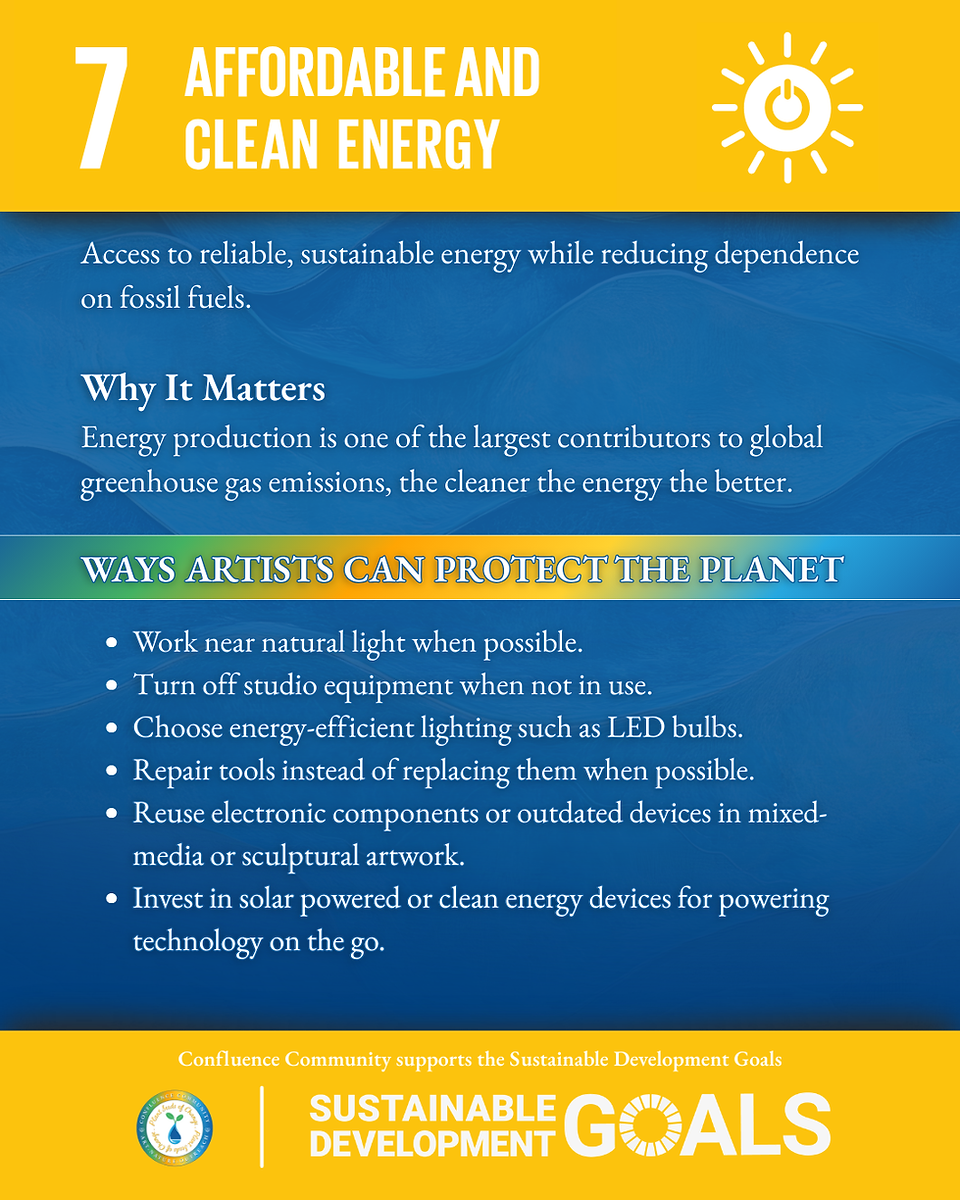
Sustainable Development Goal 7: Affordable and Clean Energy
Plastic products are primarily produced from fossil fuels. Reducing consumption and finding ways to creatively reuse materials can help reduce demand for energy-intensive manufacturing.
Reducing Energy and Resource Consumption
Small changes in how materials are sourced and used can help reduce environmental impact.
Ways artists can support this goal:
Extend the life of materials by reusing scrap paper, canvas, and wood
Repair or repurpose materials instead of discarding them
Purchase second-hand art supplies when possible
Support local reuse stores, thrift shops, and creative reuse centers
Sustainable Development Goal 11: Sustainable Cities and Communities
Cities and communities play a critical role in addressing environmental challenges such as waste management, pollution, and sustainable public spaces.
Creative Reuse and Community Engagement
Artists can help communities rethink waste and sustainability through creative reuse projects and public engagement.
Ways artists can support this goal:
Create eco-art using reclaimed materials such as plastic caps, packaging, or discarded objects
Collaborate with schools or community groups on public art made from recycled materials
Organize neighborhood art projects that highlight sustainability and environmental stewardship
Donate extra art supplies or materials to schools, youth programs, or community centers
Sustainable Development Goal 13: Climate Action
Climate change is one of the most significant global challenges of our time. Artists can help translate complex environmental issues into visual and emotional experiences that encourage reflection and action.
Encouraging Sustainable Habits and Environmental Awareness
Creative practices can encourage people to rethink environmental responsibility.
Ways artists can support this goal:
Choose durable materials that will last rather than disposable supplies
Minimize packaging waste by buying materials in bulk or refillable containers
Reduce studio waste through thoughtful planning and material reuse
Create artwork that sparks conversation about environmental issues and sustainability
Sustainable Development Goal 14: Life Below Water
Preventing Plastic and Microplastic Pollution
Marine ecosystems are heavily impacted by plastic pollution. Small items such as bottle caps are commonly found during shoreline cleanup efforts and can pose risks to marine animals.
Ways artists can support this goal:
Participate in beach or shoreline cleanups and incorporate collected materials into eco-art
Avoid rinsing acrylic paints or plastic-based pigments directly into water systems
Use filtration methods or absorbent materials when cleaning brushes
Create artwork that raises awareness about ocean health and marine biodiversity
Sustainable Development Goal 15: Life on Land
Wildlife can ingest plastic debris, and plastic fragments can accumulate in soils and natural environments.
Protecting Natural Ecosystems
Art practices can also impact land ecosystems through waste generation, chemical disposal, and material sourcing.
Ways artists can support this goal:
Reduce single-use plastics in studio supplies
Reuse packaging materials for storage or art projects
Source natural or reclaimed materials when possible
Support art practices that respect biodiversity and natural environments
Sustainable Development Goal 17: Partnerships for the Goals
Collaboration and Collective Impact
Environmental progress is strongest when communities work together.
Ways artists can support this goal:
Participate in the Plastic Cap Eco-Art Challenge
Partner with schools, environmental groups, or community organizations
Host eco-art workshops or collaborative projects
Share sustainable studio practices and creative reuse ideas with other artists
Small Creative Choices, Global Impact
Artists often work with materials like paper, plastics, packaging, pigments, and found objects. By approaching these materials thoughtfully, artists can help reduce waste, protect ecosystems, and inspire others to think differently about the resources we use.
The Plastic Cap Eco-Art Challenge encourages artists and communities to transform discarded materials into creative works that raise awareness about environmental responsibility. Through mindful studio practices, creative reuse, and collaboration, artists can contribute to a more sustainable and environmentally conscious creative culture.



Fundraising and Sponsorship Opportunities
Fundraising Goals
Establish Sustainable Support for Artists and Community Programming
A core goal of this initiative is to build a sustainable financial foundation that allows artists to participate while ensuring long-term program stability.
Goal: $5,000 - $10,000
Raised Funds Will Directly Support:
Donations for Global Reforestation Efforts
A portion of funds will support global reforestation initiatives, helping restore ecosystems, improve biodiversity, and contribute to long-term environmental resilience connected to the themes of this project.
Meaningful Paid Opportunities for Artists and Creatives
This initiative aims to build long-term pathways for artists to be compensated for their skills and contributions, helping shift toward more equitable and sustainable creative economies.
Artist Honorariums
Honorariums recognize the time, labor, and creative contribution of participating artists, ensuring their work is valued beyond exposure and acknowledged as professional practice.
Contributor Stipends
Stipends support writers, facilitators, organizers, and collaborators whose knowledge and participation help shape the program and expand shared learning resources.
Community Engagement and Outreach
Supports programming, public conversations, and outreach efforts that invite broader community participation and make the initiative accessible to diverse audiences.
Materials and Resources
Funding helps provide shared materials, sustainable supplies, and practical resources that reduce financial barriers and support responsible creative production.
Exhibition and Presentation Costs
Covers essential expenses related to showcasing the work, including curation, documentation, and presentation platforms that allow artists’ work to be experienced professionally.
Administrative Infrastructure and Accessibility Tools
Provides the operational support needed to coordinate the program responsibly, including accessible platforms, communication tools, and systems that ensure participation support.
WHY DOES IT MATTER?
Ultimately, this effort aims to create meaningful paid opportunities for artists and creatives while strengthening the systems that support their work.
This fundraising initiative is designed to reduce financial barriers for participating artists and expand the program’s capacity to grow responsibly. Contributions help create opportunities for emerging and underrepresented creatives, support collaborative community experiences, and ensure that future programming remains inclusive, professionally supported, and community-driven.
Our perspective centers on valuing the labor and contributions of artists while re-examining long-standing practices within the art industry and broader economy that often ask more of artists than they return. Artists do not need to struggle financially to be considered successful, and we believe it is possible to move beyond systems built on scarcity, competition, and hierarchy.
Our long-term vision is to compensate every selected artist, rather than rewarding only a small number through competitive rankings or hierarchical awards. This program prioritizes creativity, collaboration, and collective growth over competition.
We are always asking ourselves:
Does a practice uplift or exploit?
Does it support sustainability or create harm?
How can we, as a community, develop new models that equitably benefit and uplift everyone while caring for the planet?
How Will We Raise the Funds?
Funding for this initiative will come from community-supported revenue streams designed to keep participation accessible while directly supporting artists and programming.
Each funding pathway contributes to specific exhibition goals outlined above.
Elements Earth Day Collection
The Elements Earth Day Collection was designed by resident artist Phyllis D.R. Sanders, a Confluence Creative Collective Partner and owner of Phil·anthropic Design Co.
The Collection includes:
Art prints
Stickers
Eco-friendly tote bags
Reusable bottles
Mugs and everyday items
A Percentage of Every Purchase Goes To:
Goal #1: Global Tree-Planting Efforts - 10%
Goal #2: Paid opportunities for participating artists and creative contributors - 30%
Goal #7: Exhibition & Presentation Costs — 10%


Memberships
Become a Member of Confluence Community!
Membership strengthens the long-term sustainability of Confluence Community while giving members access to collaboration opportunities, and the Community Directory.
Membership Levels:
Sprout - $100
Bloom - $250
Harvest - $500
Learn more about memberships here:
https://www.confluencecommunity.org/community-membership
Memberships Contribute To:
Goal #8: Administrative Infrastructure & Accessibility Tools — 25%
Goal #6: Materials & Shared Resources — 20%
Goal #2: Meaningful Paid Opportunities for Artists & Contributors — 20%
Community Sponsorship
Sponsors are recognized publicly as supporters of the Earth Day initiative and included in the list of sponsors connected to the exhibition and programming.
Accessible Sponsorship Tiers:
Designed for small businesses, organizations, and community supporters:
Green Sponsor: $250
Blue Sponsor: $500
Gold Sponsor: $750
Sponsors will be:
Featured on the Earth Day Sponsor List
Featured in the Digital Exhibition Archive on our website
Sneak Peek of the Exhibition before it announced
Listed in our Community Directory
Receive the Steward of our Planet Badge
Community Sponsorship Supports:
Goal #3: Artist Honorariums — 30%
Goal # 4: Contributor Stipends — 20%
Goal # 5: Community Engagement & Outreach — 25%
Goal # 7: Exhibition & Presentation Costs — 10%
Goal # 6: Materials & Resources — 15%
Title Sponsorship
Support the Earth Day Art Exhibition as the primary sponsoring partner.
The Title Sponsor will play a key role in making this exhibition possible, helping create accessible opportunities for creatives, and directly supporting artists and contributors. This partnership reflects a shared commitment to environmental awareness, creative expression, and community engagement.
Title Sponsor Recognition Includes:
Featured recognition as Title Sponsor across exhibition materials and announcements
Prominent logo placement on the exhibition website and partner pages
Recognition within exhibition publications and digital catalog releases
Acknowledgment across social media and promotional communications
Inclusion in community partner and sponsor listings throughout the exhibition cycle
Opportunity to share organizational initiatives, resources, or aligned messaging.
Receive the Steward of our Planet Badge and Partner Badge
Support the Exhibition as our Main Sponsor and Partner:
$10,000
Grants
Strategic grant funding from foundations, arts councils, and environmental organizations may be pursued to support specific aspects of the exhibition and programming.
Grant Funding May Support:
Accessibility tools and inclusive participation platforms
Educational publications and resource development
Environmental resource directories
Expanded global outreach and collaboration
While grants help scale impact, the program remains community-driven and not dependent on institutional funding alone.
Community Donations
Open donations allow individuals who believe in the mission to directly support the program.
Donations help fund:
Global Reforestation Efforts
Artist honorariums
Contributor stipends
Accessibility and outreach efforts
Community programming
This creates an option for participation even for those who are not artists or sponsors but still want to contribute to meaningful cultural and environmental work.
The Story Behind the Elements Earth Day Collection
The primary artwork featured throughout the Earth Day Art Exhibition began as part of a creative challenge called Playing With Shapes, a daily prompt to explore simplicity and repetition as. a means to reduce pressure in the creative process.
The project emerged during a period shaped by chronic illness, frequent medical appointments, daily fevers, ongoing pain, and extreme fatigue. Creative routines that once felt natural suddenly became difficult to access, even picking up a sketchbook or preparing paints required more energy than I had to give. Something that had always helped me move through depression and hard seasons began to feel out of reach.
Over the years, I have been teaching myself to work with digital drawing tools on my iPad, and as new limitations emerged, I began to lean into that medium more intentionally. I could still have the tactile experience of drawing without the physical strain of supplies, setup, or cleanup. It became a way to keep creating while meeting my body and mind where it was.
Playing With Shapes started as a simple strategy: reduce decision-making, remove expectations, and focus on exploration. Instead of worrying about what to create or what colors worked together, the process became intuitive. Use a limited color palette. Use basic geometric shapes. See what happens.
Art has always been a form of release for me, less about outcome and more about letting go, and being with myself, this practice returned me to that feeling. Complexity and conceptual planning fell away. The goal was not perfection, but continuity: creating something, however small, each day.
On difficult days, repetition and simplicity provided structure and a way to sit with grief, pain, and memory through texture, color, and the natural rhythm of processing emotions. On better days, the work expanded into experimentation with tools, brushes, and form. Each composition documented presence and progress, a reflection of emotional state, physical capacity, creative growth, and the experience of sitting with the self, and caring for inner wounds.
As the series grew, a larger body of work began to take shape. Certain pieces stood out for their balance and interconnectedness, where layered geometric forms suggested movement and structure. Pieces from this series now appear throughout the Earth Day exhibition programming, across the website, and on functional products such as prints, tote bags, mugs, reusable bottles, and stationery.
The series reflects the broader philosophy behind Confluence and my personal practice, that creativity and community are cultivated through consistency, and curiosity, grounded not in special skills or fancy tools, but in showing up and learning about the self, and our shared humanity.
What began as a personal method for continuing to create, slowly evolved into a visual system representing connection, between elements, between people, and between inner experience and collective care for the world around us.
Thank you for being part of this creative journey with me.
With Love,
Phyllis D.R. Sanders
Resident Artist & Confluence Creative Collective Partner
Founder of Phil·anthropic Design Co.
2027 Residency Program
Coming soon!!! The Earth Day Resident Artist Program will invite one artist each year to help shape the visual story and creative direction of the next Earth Day Exhibition.
The residency is designed as a supported creative pathway, offering artists the opportunity to develop original artwork while gaining experience in collaborative exhibition development, community engagement, and socially engaged creative practice. The residency will focus on process, mentorship, and shared creation.
Many of our organizational goals emphasize creating pathways that make participation more accessible, lowering barriers to entry, and supporting artists as they bring their work into public spaces. The goal has never been to build something that belongs to one person, but to prepare the garden bed, cultivate the soil, and create a space where others can grow too.
Application Period:
Opens: March 15th
Closes: June 1st
Residency Period:
Fall - Spring (approx. 8–10 months)
September 2026 - May 2027
The Resident Artist will:
Create original campaign artwork for the next Earth Day exhibition
Develop visual assets used across exhibition materials and products
Collaborate with the Confluence team on creative direction
Participate in selected planning and community engagement efforts
Document their creative process as part of the story behind the art
The Program Emphasizes:
Accessible creative practice
Working within collaborative teams
Community focused messaging
Sustainable pacing
Transparency in creative process
Artists are invited to explore how creativity impacts environmental awareness, community care, and lived experience.
Check back on March 15th for the Application!
Community-Driven Initiative & Capacity Transparency
Confluence Community is currently a small, grassroots initiative supported by a small number of contributing collaborators. The Earth Day Art Exhibition, and the opportunities outlined throughout this toolkit, are intentionally designed to grow through shared participation rather than a large institutional structure.
This means the success of these goals depends not only on financial support, but on people choosing to actively contribute their time, skills, and ideas. As new collaborators, volunteers, partners, and contributors join, the program’s capacity expands, allowing more artist support, programming, and community opportunities to become possible.
Many creatives and organizations express a desire for more accessible exhibitions, equitable artist compensation, and collaborative spaces. This initiative exists as an invitation to help build those opportunities together. Community-driven work only grows when people step forward to participate in shaping it.
Funding, programming, and paid opportunities will scale responsibly based on financial support and active community involvement. Our intention is not to promise outcomes beyond our capacity, but to build something sustainable through shared effort, transparency, and collective responsibility.
Organizational Structure & Transparency
Confluence Community is currently registered as an LLC and operates as a growing grassroots cooperative initiative.
At this stage of development, we have intentionally chosen to build programs, partnerships, and sustainable operational systems before transitioning into a formal nonprofit or cooperative structure. This allows us to remain flexible, experiment with collaborative models, and develop programming responsibly as the community grows.
Because we are NOT a registered 501(c)(3) nonprofit organization at this time:
Contributions are not tax-deductible charitable donations
Funds are managed directly to support program operations, artist compensation, and community initiatives outlined in this project
Your Voice Matters
Creative Experience Survey
Your voice matters, and sharing your creative experiences with us, can help shape future programming and experiences.
Earth Day Community Partners


Earth Day Contributors:
Adriana Rocha
Phyllis D.R. Sanders
Kristin McClanathan
Vision for Earth Day Program
The Earth Day Program is not intended to become a large event quickly, it is designed to grow intentionally, expanding only as community capacity, leadership, and resources grow alongside it.
Each phase builds infrastructure for the next, and invites the community deeper into the process, while inspiring global communities to celebrate our beautiful planet together.
5–10 Year Vision Roadmap
Expanded Programming as We Grow
Artist talks
Environmental storytelling panels
Creative workshops
Community project showcases
Youth or beginner creative tracks
Outdoor art + nature experiences
Workshops
Local environmental organization talks
Creative demonstrations
Community planting or restoration action
Creative + Environmental Toolkit Library
A permanent resource archive:
sustainable art practices
community engagement guides
accessible exhibition models
artist sustainability resources
Phase 1: Foundation Building|Years 1–2
Primary Focus
Build the foundation of the Earth Day program, mission, team, and resources while developing identity, trust, and refining the structure. Focus on piloting programs, building processes, and documenting methods to create repeatable models for future growth.
Key Outcomes
Annual Earth Day Art Exhibition established
Global artist participation
Community resource sharing begins
Toolkit model developed
Membership + sponsorship ecosystem tested
Earth Day campaign artwork established
Revenue experiments (products, donations, partners)
Year 1: 2025
Earth Day Virtual Art Exhibition
Goal: 5-10 artists
Earth Day Opening Reception
Earth Day Catalog
Earth Day Residency Pilot 2025-2026
Earth Day Digital Archive
Earth Day Impact Report
Year 2: 2026
Earth Day Virtual Art Exhibition
Earth Day feature in Where We Are Magazine
Earth Day Digital Archive
Earth Day Art Collection
Earth Day Residency Program 2026-2027
Earth Day Impact Report
Phase 2: Community Infrastructure | Years 3–5
Primary Focus
Stabilization period, replicate growth from 2026, and refine processes. Focus on deepening engagement, developing leadership pipelines (residency & internship programs), and preparing for public-facing events like a mini festival.
Year 3: 2027
Earth Day Virtual Art Exhibition
Earth Day feature in Where We Are Magazine
Earth Day Digital Archive
Earth Day Art Collection
Earth Day Residency Program 2027-2028
Earth Day Internship Program
Earth Day Impact Report
Year 4: 2028
Earth Day Virtual Art Exhibition
Earth Day feature in Where We Are Magazine
Earth Day Digital Archive
Earth Day Art Collection
Earth Day Residency 2028-2029
Earth Day Internship Program
Earth Day Mini Festival
Earth Day Impact Report
Year 5: 2029
Earth Day Virtual Art Exhibition
Earth Day feature in Where We Are Magazine
Earth Day Digital Archive
Earth Day Art Collection
Earth Day Residency 2029-2028
Earth Day Internship Program
Earth Day Festival
Earth Day Impact Report
Phase 3: Years 6-10
Primary Focus
Focus on global collaboration, establishing the Earth Summit as a recurring platform for artists, environmentalists, and community leaders to shape programming and policy for future festivals.
Year 6: 2030
Earth Day Virtual Art Exhibition
Earth Day feature in Where We Are Magazine
Earth Day Digital Archive
Earth Day Art Collection
Earth Day Residency 2029-2028
Earth Day Internship Program
Earth Day Festival
Mini Earth Summit
Earth Day Impact Report
Year 7: 2031
Earth Day Virtual Art Exhibition
Earth Day feature in Where We Are Magazine
Earth Day Digital Archive
Earth Day Art Collection
Earth Day Residency 2029-2028
Earth Day Internship Program
Earth Day Festival
Earth Summit
Earth Day Impact Report
Year 8: 2032
Earth Day Virtual Art Exhibition
Earth Day feature in Where We Are Magazine
Earth Day Digital Archive
Earth Day Art Collection
Earth Day Residency 2029-2028
Earth Day Internship Program
Earth Day Festival
Earth Summit
Earth Day Impact Report
Year 9: 2033
Earth Day Virtual Art Exhibition
Earth Day feature in Where We Are Magazine
Earth Day Digital Archive
Earth Day Art Collection
Earth Day Residency 2029-2028
Earth Day Internship Program
Earth Day Festival
Earth Summit
Earth Day Impact Report
Year 10: 2034
Earth Day Virtual Art Exhibition
Earth Day feature in Where We Are Magazine
Earth Day Digital Archive
Earth Day Art Collection
Earth Day Residency 2029-2028
Earth Day Internship Program
Earth Day Festival
Earth Summit
Earth Day Impact Report
Growing List of Helpful Links:
Official Earth Day Page:
VIRTUAL GALLERY:
Artists Exhibition Submission Form:
Earth Day Community Partner Form:
Where We Are Magazine Submission Form:
Eco-Art Event & Meetup Checklist:
Eco-Art Impact Tracker:
This event is officially registered on the EarthDay.org website and 2026 event map!
Check out earthday.org for more information, toolkits, and other ways to take action for our planet.
Frequently Asked Questions FAQS
Who can participate in the Earth Day Art Exhibition?
Participation is open to artists, writers, photographers, organizations, businesses, and community members from anywhere in the world. The exhibition welcomes a wide range of creative work, environmental initiatives, and community contributions connected to the themes of Earth Day.
Do I have to be an artist to get involved?
No. This initiative is designed for multiple forms of participation. You can contribute artwork, share environmental resources, submit articles or projects, become a community partner, volunteer, sponsor the exhibition, or support the program through memberships or donations.
Is there a fee to submit artwork?
No. The open call is free to submit. Reducing financial barriers to participation is an important part of how this exhibition is structured.
How are funds from this initiative used?
Confluence Community is currently registered as an LLC and is not a 501(c)(3) nonprofit organization at this time. Contributions and sponsorships support programming and artist opportunities but are not tax-deductible charitable donations.
Are contributions tax-deductible?
Confluence Community is currently registered as an LLC and is not a 501(c)(3) nonprofit organization at this time. Contributions and sponsorships support programming and artist opportunities but are not tax-deductible charitable donations.
What does it mean to become a Community Partner?
Community Partners are individuals, organizations, or businesses who want to publicly support and participate in Earth Day initiatives through Confluence Community. Partners are featured on the Community Partner page and may share resources, events, or initiatives aligned with the exhibition.
How is this different from the Community Directory?
The Community Partner option is a simple, open way to show support and participate in a specific initiative. The Community Directory is part of Confluence memberships and includes ongoing visibility, category badges, and deeper collaboration opportunities across Confluence Community programs.
Can organizations or businesses participate without sponsoring?
Yes. Organizations and businesses can contribute resources, share initiatives, submit articles or projects, or join as Community Partners without financial sponsorship.
What happens after the exhibition ends?
The exhibition continues to live as an online archive. Selected work and contributions may also appear in Where We Are Magazine, exhibition publications, and ongoing Confluence Community programming, allowing the impact to extend beyond a single event.
How else can I support the initiative?
You can support by sharing the open call, purchasing from the Earth Day Collection, becoming a member, joining as a partner or sponsor, contributing resources, or volunteering your time and skills.
Where is Confluence Community located?
We are an online based international art organization, the LLC is registered in the state of the Florida and falls under the jurisdiction of the United States of America and the state of Florida.
Was this toolkit helpful?
Yes
No
Yes, but I still have questions
No, I am kind of confused
How would you like to participate?
Submit Art
Submit Writing
Become a Community Partner
Help with the Exhibition


Comments